Is Slime Safe for Kids? A UK Parent's Guide by Age (2026)
Quick Answer
Slime is not suitable for children under 3. For children aged 3 and over, a toy slime sold for their age is generally fine with an adult supervising, as long as they no longer put things in their mouth. Buy from sellers with clear labelling, and keep activators away from children.
Short answer: slime isn't suitable for children under 3. For children aged 3 and over, a toy slime sold for their age is generally fine to play with while an adult supervises, as long as they've stopped putting things in their mouth. The things to watch are swallowing, sore skin and badly made slime with too much boron.
This guide goes through it age by age, explains what "toxic" really means for slime, and shows you how to check a slime before you buy it online in the UK. We're a small slime maker in Hertfordshire, so we've kept it practical and honest.
Is Slime Safe? An Age-by-Age Guide
Under 3s (including 2 year olds): not suitable
Slime isn't a toy for babies or toddlers. Children this age explore everything with their mouths, and slime isn't food. Many slimes also have charms, beads or sprinkles mixed in, and small parts like these are a choking risk for little ones.
If your toddler loves squishy textures, save slime for later and stick to messy play made for their age, with you right beside them.
3 and 4 year olds: yes, with an adult sitting with them
At 3 and 4, slime can be a lovely hands-on activity, but this is the age for close supervision rather than "an adult somewhere in the house".
- Check they've stopped mouthing toys. If they still put things in their mouth, wait a while. Slime, and any charms in it, isn't for them yet.
- Sit with them for the whole session and keep it short. Ten to 15 minutes is plenty.
- Use a tray or wipeable mat so the slime stays in one place.
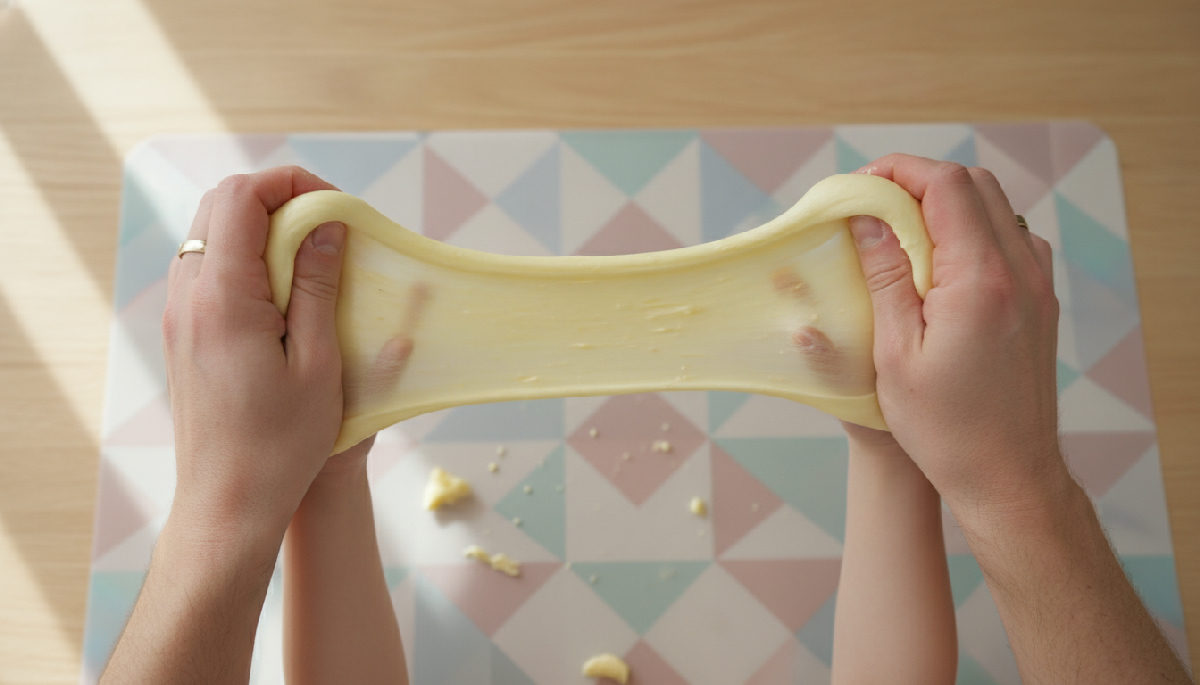
- Pick an easy texture. Butter slime is soft, holds together and doesn't drip, so it's simpler for small hands than runny or very sticky slime.
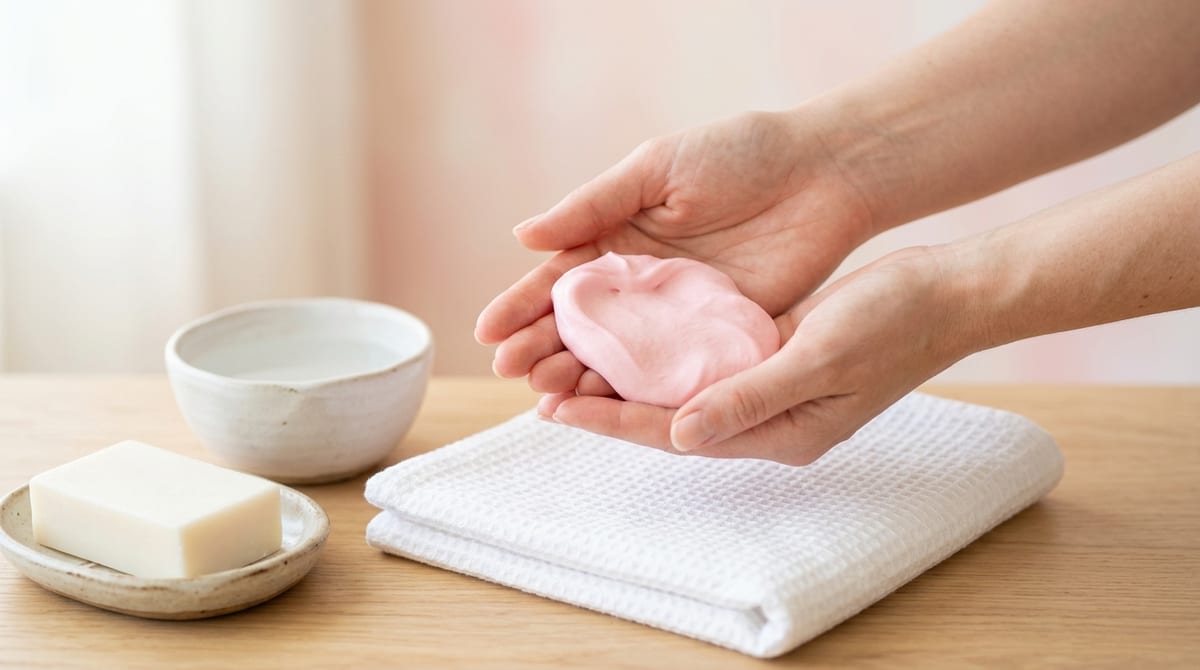
- Wash hands before and after, and keep slime away from eyes.
5 and over: yes, with an adult nearby
From around 5, many children can follow a few simple slime rules, so you can step back a little. Stay in the room, though, and keep supervising children under 8.
- Teach three rules: not in your mouth, off the mat means back in the pot, and wash your hands after.
- Put the lid back on when play is over, and store the pot out of reach of younger siblings and pets.
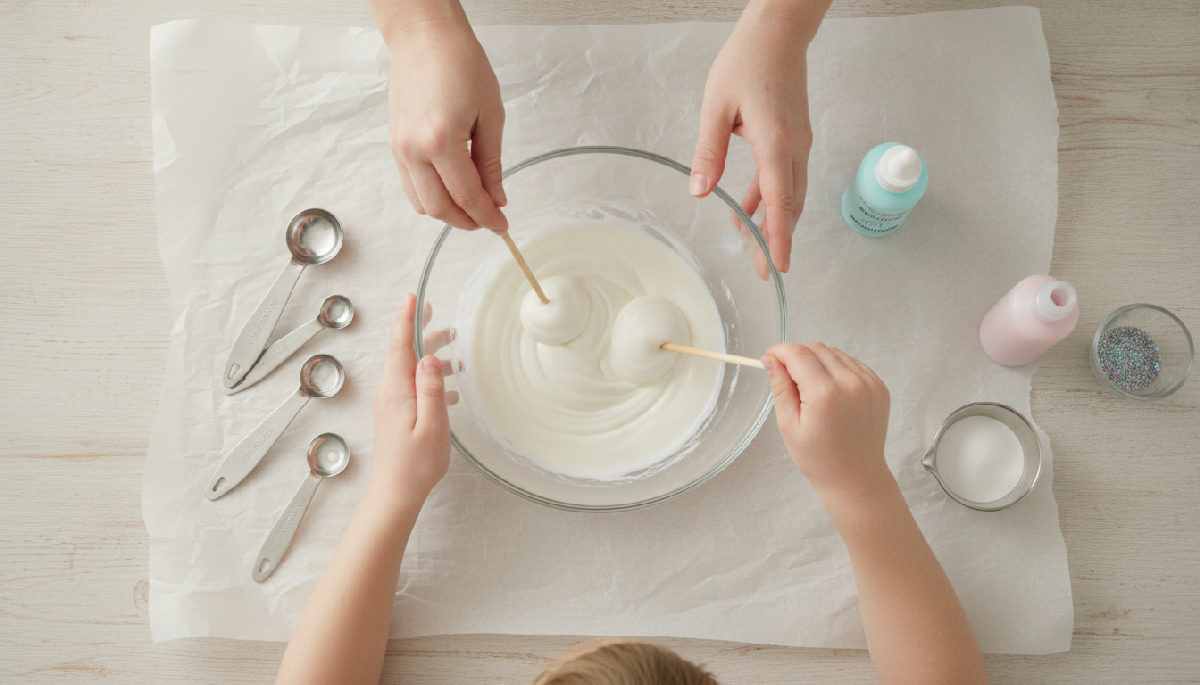
- If they want to make their own slime, an adult should handle the activator. Our beginner tips for making slime at home explain how.
| Age | Is slime OK? | Supervision |
|---|---|---|
| Under 3 | No | – |
| 3–4 years | Yes, if it's sold for their age and they no longer mouth toys | An adult sitting with them |
| 5–7 years | Yes | An adult in the room |
| 8 and over | Yes | Occasional check-ins |
Is Slime Toxic?
Slime isn't food, and it can be harmful if it's swallowed or if it contains too much boron. That's the honest answer. Toy slime sold in Great Britain has to meet toy safety rules, including a limit on boron, so the risks mainly come from eating slime, from handling concentrated activators, and from slime that doesn't meet the rules.
Most slime starts with PVA glue plus an activator, usually a boron compound such as borax, boric acid or sodium borate, which links the glue into something stretchy. Too much boron is a problem. As Which? explains, "Exposure to excessive levels of boron could cause irritation, diarrhoea and vomiting in the short term, and may impair fertility and cause harm to unborn children in pregnant women." That's why there's a limit on how much boron can come out of toy slime (more on that below).
Is butter slime toxic? What about cloud slime?
Butter slime and cloud slime are still slimes, so the same safety rules apply. Butter slime is usually a glue-based slime with soft clay mixed in to make it smooth and spreadable. Cloud slime usually has instant snow mixed in to make it light and drizzly. Neither is meant to be eaten: supervise, keep it out of mouths and eyes, and wash hands after play. Our slime ingredients guide explains each ingredient in plain English.
What if my child eats slime?
Try not to panic, and keep the pot or packaging to hand so you can say what it is. The NHS says to call 111 if you're not sure whether something your child has swallowed is harmful. It says to call 999 or go to A&E if you think they may have swallowed something harmful, or if they lose consciousness, have a seizure or have severe difficulty breathing. See the NHS advice on poisoning or use NHS 111 online.
Is Slime Activator Safe for Kids?
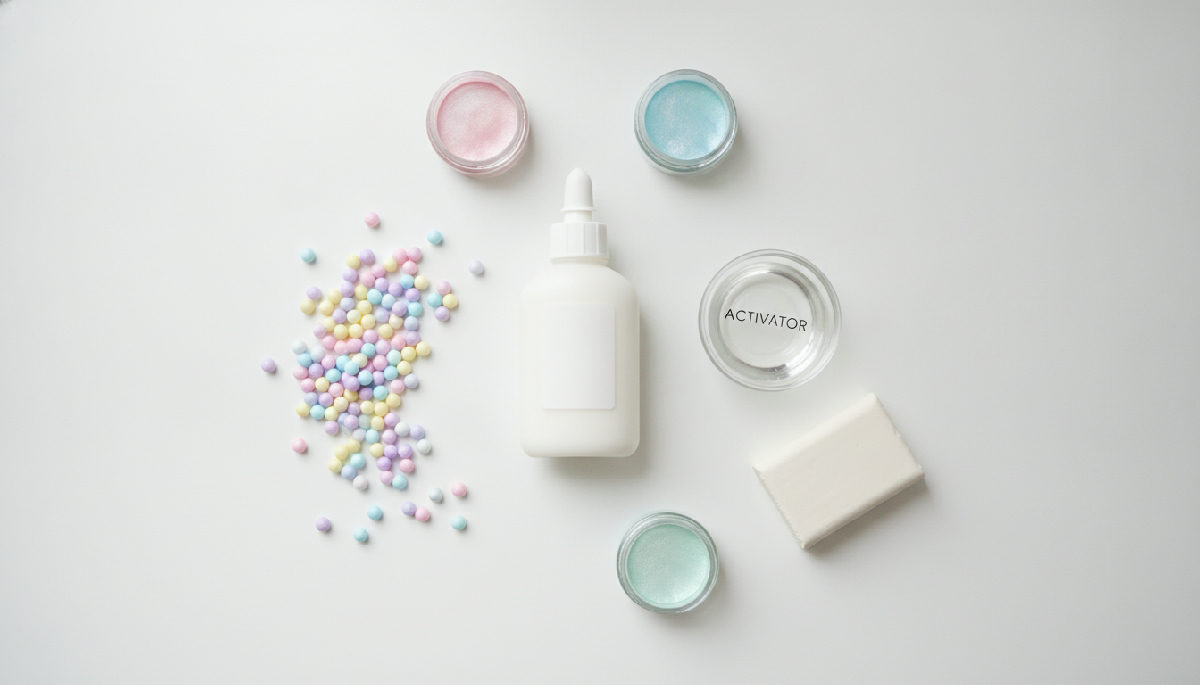
Activator is the part of slime that needs the most care. It's what turns glue into slime, and it's usually a concentrated boron compound: borax powder, boric acid, sodium borate, or a contact lens solution that contains them.
Playing with finished slime is not the same as handling activator on its own. So:
- Children should never handle borax or boric acid powder. An adult should measure and add any activator.
- Keep activators labelled, in their original containers and out of reach, just like other household products.
- More isn't better. Adding extra activator to "fix" sticky slime can make it rubbery and adds more boron. Add tiny amounts and knead well before adding more.
- Treat slime kits the same way. The activator in a kit is for a grown-up to measure and add.
- "Borax-free" isn't automatically safer. Swapping in laundry detergent or other cleaning products brings in ingredients that weren't designed for play on skin.
- If activator gets in eyes, rinse with water. If it's swallowed, or you're worried, call NHS 111.
How to Check Slime Before You Buy Online in the UK
The UK rules, in plain English
In Great Britain, slime sold as a toy is covered by the Toys (Safety) Regulations 2011. Toys must be safe, and there are specific limits on chemicals. The toy safety standard EN 71-3 limits how much of certain elements can migrate (come out) of a toy. For slime, the boron limit is 300mg/kg. Which? puts it like this: the standard "specifies that toy slimes must have boron levels that fall below 300mg/kg".
GOV.UK guidance on the regulations explains what makers, importers and sellers have to do. In Great Britain, local trading standards enforce the rules.
Why it's worth checking
Slime that breaks the boron limit does turn up for sale:
- In December 2018, Which? reported that in its July tests "eight out of 11 toy slimes we tested exceeded the EU safety limit". In a later round, "More than 40% of the slimes and putties on sale for Christmas that we tested failed the EU safety standard", and "The worst slime we tested had four and a half times the permitted level of boron: 1,400mg/kg".
- In a 2024 product safety report, the Office for Product Safety and Standards (OPSS) looked at a butter slime kit sold online. "The sample was found to contain 719 ± 137mg/kg of boron, which exceeds the maximum permissible concentration of 300mg/kg." The import was rejected at the border and destroyed, and the listing was removed.
A quick checklist before you buy
- Clear age guidance on the listing and on the pot.
- Warnings in English. GOV.UK guidance says hazard information must be marked "in English, in a clearly visible, easily legible, understandable and accurate manner".
- A UKCA or CE mark. GOV.UK guidance lets businesses use "either CE or UKCA markings" for goods sold in Great Britain.
- A name and postal address for the maker or importer, on the toy or its packaging.
- A seller who answers questions about ingredients and scents before you order.
- No safety alerts. Search the government's Product Safety Alerts, Reports and Recalls page, which you can filter by product category, including toys.
- A quick check when it arrives. The pot should be sealed, with no leaks and no harsh chemical smell. If anything seems wrong, don't let your child play with it and contact the seller. For slimes found to be unsafe, Which? advises: "stop playing with it immediately."
Everyday Slime Safety Tips
Before play
- Wash and dry hands
- Skip play if there are cuts, grazes or an eczema flare-up on the hands
- Take off rings and bracelets, tie hair back and roll sleeves up
- Use a smooth, wipeable surface or tray
During play
- Never eat slime. It isn't food
- Keep slime away from eyes, and rinse with water if it gets in
- Keep it off carpets, sofas and clothes
- Supervise younger children closely
After play
- Put the slime back in its pot and close the lid
- Wash hands with soap and water
- Store it out of reach of young children and pets
Sensitive Skin, Scents and Allergies
- Sensitive skin or eczema: keep sessions short, avoid play on broken skin, wash hands afterwards and stop if skin gets red or itchy.
- Scents: fragrance can bother some people. The toy rules restrict fragrances too: GOV.UK guidance notes the regulations set out "a list of allergenic fragrances that toys must not contain". If your child has known allergies, ask the seller what's in the scent before you buy.
- Other allergies: check ingredients with the seller first. If you're unsure, start with a short session and watch for any reaction.
Common Worries
Will slime ruin my furniture or clothes?
Not if it stays on a mat. If it gets onto fabric, harden it with an ice cube, peel off what you can, then dab the rest with a little white vinegar in warm water. Test on a hidden area first.
How do I know if slime has gone off?
Bin it if it smells unpleasant, changes colour, shows spots of mould, or goes hard and crumbly. With good storage, our handmade slimes typically last 2 to 4 weeks. Our slime care guide has storage tips.
Buying Slime for a Child From Us
We're Amber's Slime Studio, a small home business in Hertfordshire. We sell our handmade slimes for ages 3 and over, with adult supervision for children under 8. All of our current slimes come with small charms, which is one more reason slime isn't for under-3s.
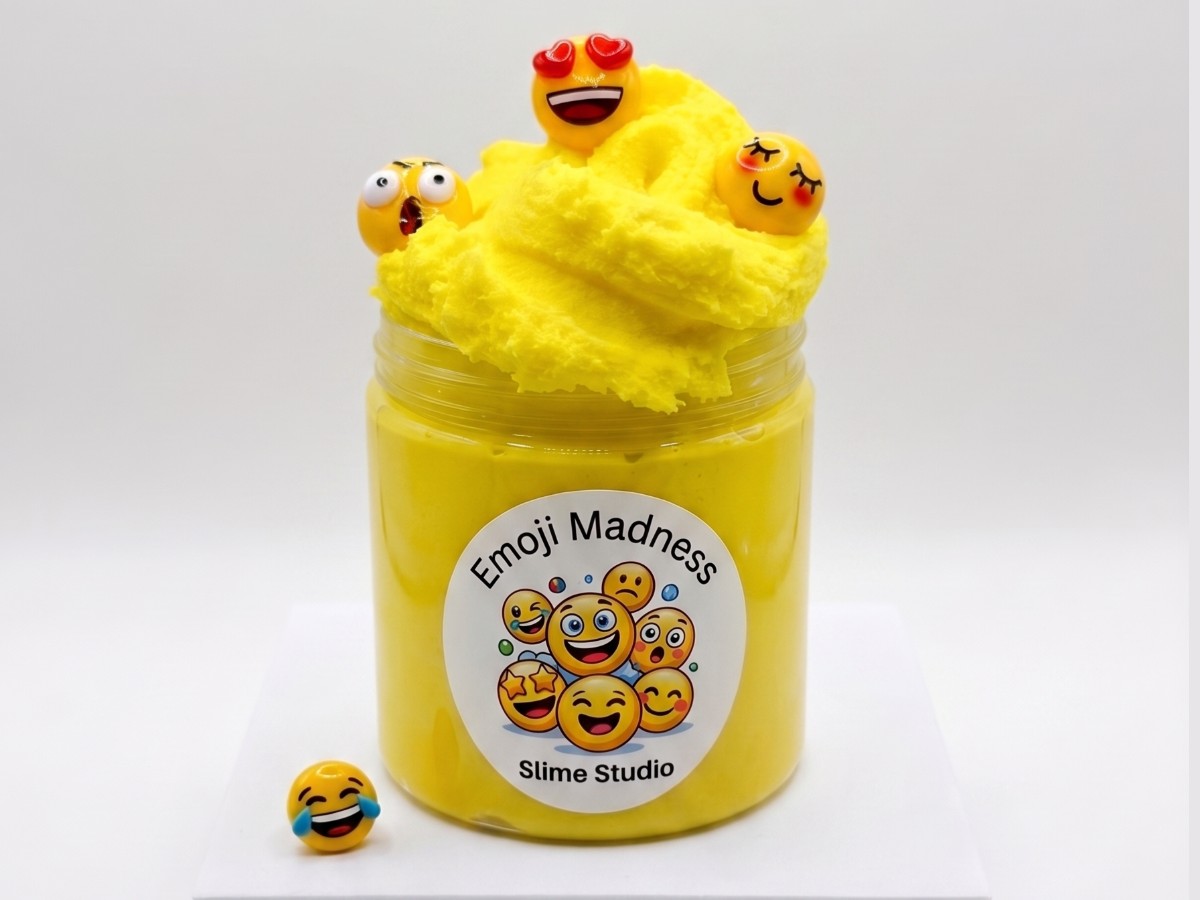
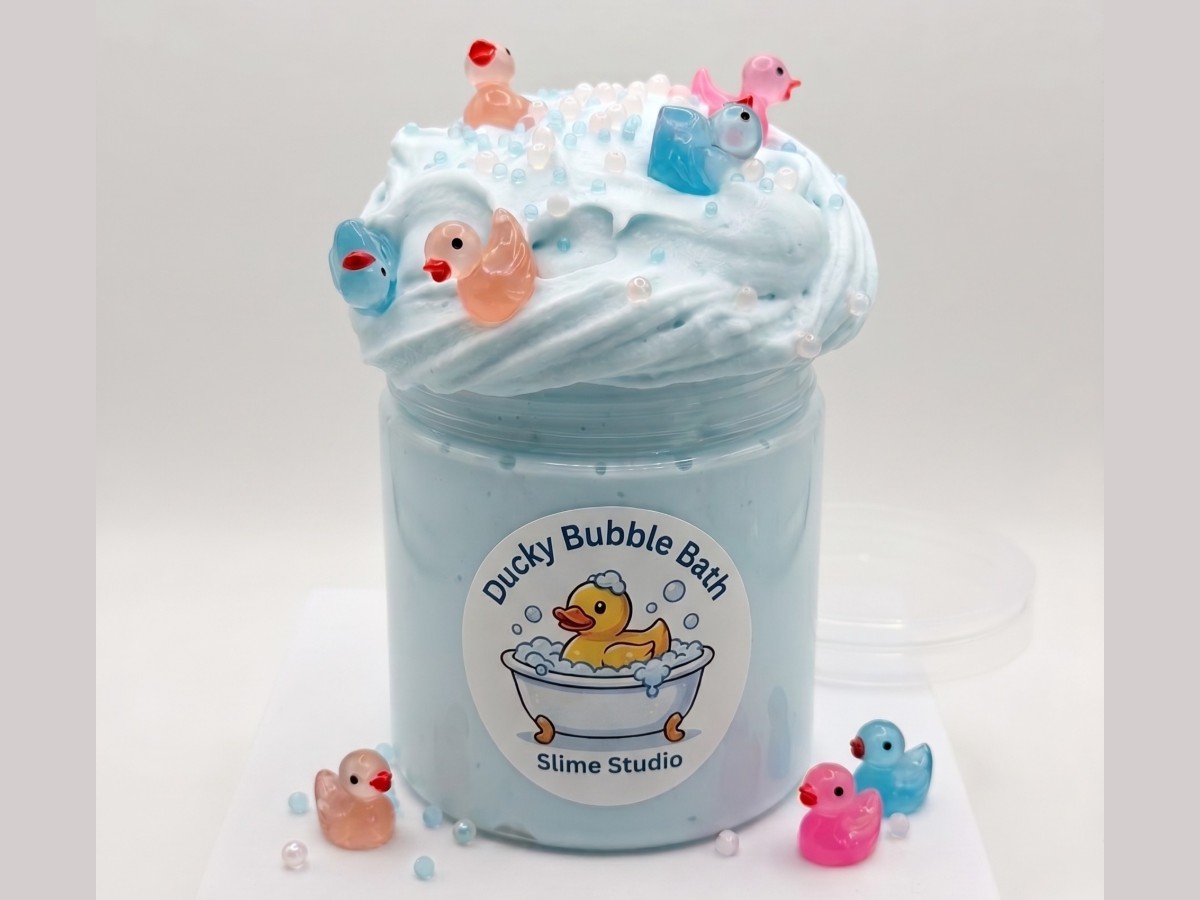
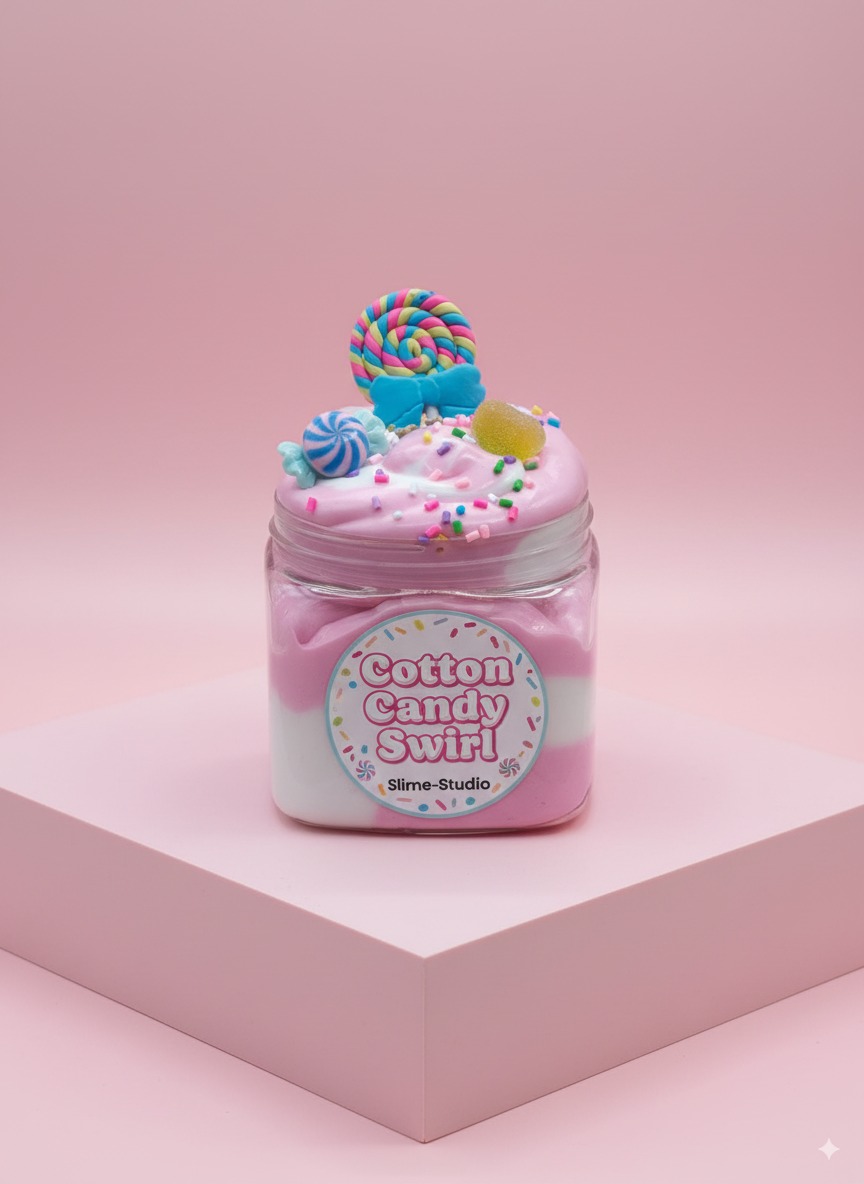
Most of our range is butter slime, the easiest texture for younger children because it's soft, holds together and doesn't drip. Cotton Candy Swirl (candyfloss scented) and Ducky Bubble Bath (passion fruit scented) are two gentle picks. Our cloud slime, Emoji Madness, is lighter and drizzlier.
Every slime comes with a sticky fix pen. If the slime gets sticky, dab a small amount on the sticky area, knead for about a minute, and repeat only if it's still sticky. Wash hands afterwards, and help children under 8 use the pen. Never use homemade activator, borax, contact lens solution or household chemicals on our slime.
Every slime is handmade to order and usually dispatched within 1–2 working days (up to 5 at busy times), with free UK delivery on 5 or more slimes. If you'd like to ask about ingredients or scents before you order, get in touch and we'll gladly help. Or you can browse handmade slime in our UK shop.
FAQ
Is slime safe for 3 year olds?
Slime can be fine for a 3 year old if it's a toy slime sold for their age, they've stopped putting things in their mouth, and an adult sits with them the whole time. Keep sessions short, use a mat, choose a soft, non-drippy texture like butter slime, and wash hands afterwards.
Is slime safe for 2 year olds?
No. Slime isn't suitable for children under 3. Toddlers still explore with their mouths, slime isn't food, and many slimes contain small charms or beads that are a choking risk. Wait until your child is at least 3 and has stopped mouthing toys.
Is butter slime toxic?
Butter slime isn't food and shouldn't be eaten, but the same safety rules apply to it as to any other toy slime. It's usually a glue-based slime with soft clay added. Check it's sold as a toy for your child's age, with clear labelling and warnings, then supervise play and wash hands afterwards.
What should I do if my child eats slime?
Keep the pot or packaging so you can say what it is. The NHS says to call 111 if you're not sure whether something swallowed is harmful, and to call 999 or go to A&E if you think your child has swallowed something harmful or they have severe difficulty breathing.
Are slime kits safe for kids with sensitive skin?
Take extra care. Slime kits include an activator, which an adult should handle, and scents or colours can irritate sensitive skin. Keep sessions short, avoid play on broken or eczema-prone skin, wash hands afterwards and stop if skin gets red or itchy. If your child has known allergies, ask the seller about ingredients first.

Written by Amber
Amber is the founder of Amber's Slime Studio. She has been making slime for years and still makes every batch by hand. She's passionate about creating high-quality slimes that bring joy and sensory satisfaction.
Learn more about Amber →