Slime Ingredients Explained: What's in Slime and What to Avoid
Quick Answer
Most slime is PVA glue linked by a boron-based activator, with extras like soft clay for butter slime, instant snow for cloud slime, colour and scent. No single ingredient makes slime automatically safe: amounts, labelling and supervision all matter, so adults should handle activators and children should never eat slime.
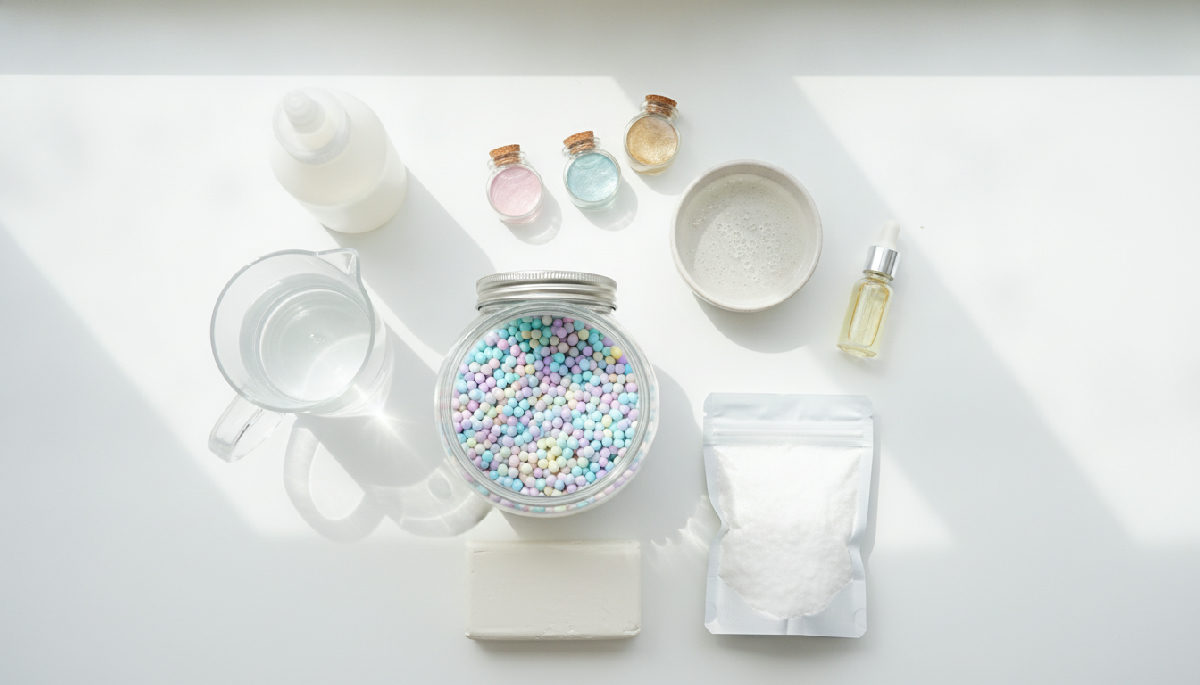
What is slime made of? Most slime is PVA glue mixed with a boron-based activator, which links the glue into something stretchy. Extras then change the feel: soft clay for butter slime, instant snow for cloud slime, plus colour, scent and charms. No single ingredient makes slime automatically safe, because amounts, labelling and supervision matter too.
Parents often ask what's actually in slime before they buy it or make it. This guide explains the common ingredients in plain English, what each one does and what to look out for. It's a general guide, as we don't share our own recipes, so if you have a question about one of our slimes, just ask us.
The Science in a Sentence
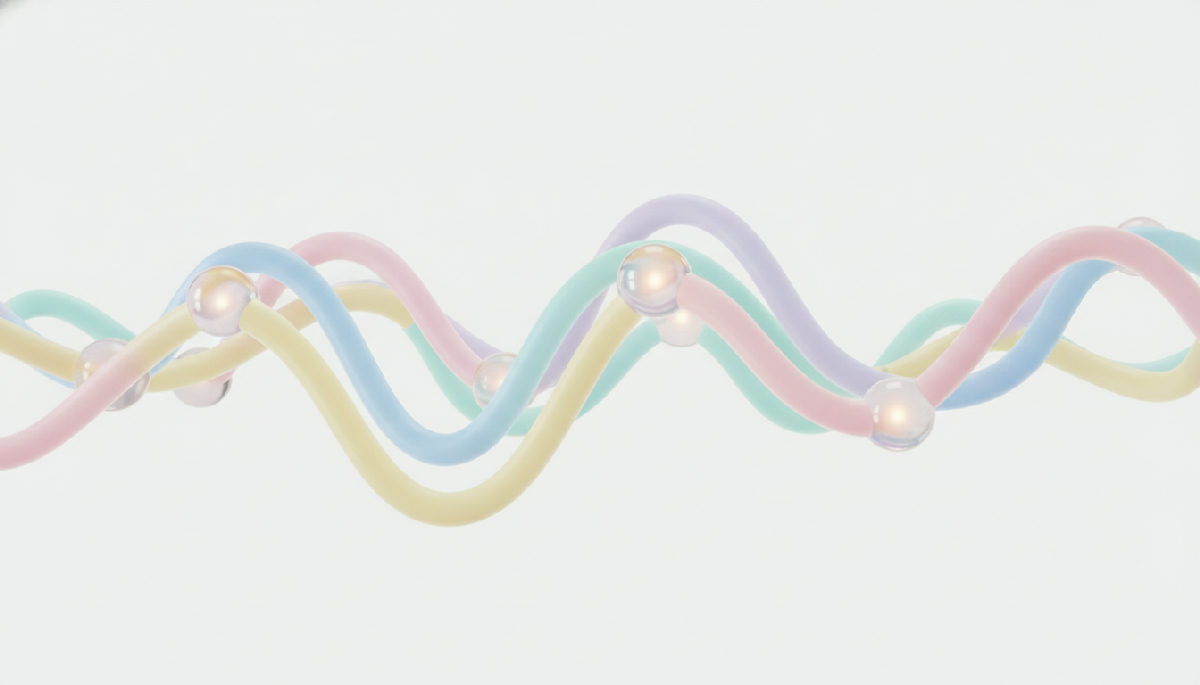
Slime gets its stretch when long chains of polyvinyl alcohol in PVA glue are loosely linked together by borate ions. That turns a runny liquid into a soft, slow-moving solid that's perfect for pokes, pulls and pops.
Core Slime Ingredients, Explained
1. PVA glue
- What it is: a water-based emulsion of polyvinyl acetate that also contains polyvinyl alcohol as a stabiliser. It's the polyvinyl alcohol that borate ions link together, which is why PVA is the usual slime base.
- Why the type matters: children's craft or school PVA is the usual choice. Multi-purpose or industrial adhesives can contain solvents and other ingredients that aren't meant for play.
- Tip: check the label says the glue is for children's crafts, and avoid solvent-based or unlabelled glues.
2. Water
- What it does: thins the glue to the right stretch and helps spread colour and scent evenly.
- Tip: clean water helps slime stay fresher for longer.
3. Boron-based activator
- What it is: a source of borate ions, such as borax (sodium borate), boric acid, or a contact lens solution that contains them. It creates the links that give slime its stretch.
- Why the amount matters: too much boron can be harmful, so toy slime has a boron limit. Under the toy safety standard EN 71-3, the limit for boron coming out of toy slime is 300mg/kg. In a 2024 product safety report, the Office for Product Safety and Standards found a butter slime kit containing "719 ± 137mg/kg of boron, which exceeds the maximum permissible concentration of 300mg/kg".
- Tip: children should never handle borax or boric acid powder. An adult should measure and add any activator, and keep it labelled and out of reach.
For background on the UK rules, see the Toys (Safety) Regulations 2011, and our parents' guide to slime safety for how to check a slime before you buy.
The Extras That Shape Texture, Scent and Colour
Softeners and texture
- Glycerin and lotion: add softness and a slower stretch. Too much makes slime sticky.
- Soft clay: turns a glue slime into smooth, spreadable butter slime. Keep clay bits out of mouths.
- Instant snow: a powder that swells with water and gives cloud slime its light, drizzly feel. Keep the dry powder away from eyes and noses.
- Contact lens solution with bicarbonate of soda: a pairing used in many home recipes. The solution still contains boron, so the same activator rules apply.
Colour
- Cosmetic-grade pigments and mica: rich colour and shimmer without a scratchy feel.
- Food colouring: bright and easy to find, but it can stain hands and fabric.
- Glitter: adds sparkle, and biodegradable glitter is an eco-friendlier option. Keep glittery slime away from very young children and pets.
Scent
- Fragrance oils are used in small amounts to make slime smell nice.
- Essential oils are strong and can irritate skin, so they need care.
- UK toy rules restrict some fragrances. GOV.UK guidance notes the regulations set out "a list of allergenic fragrances that toys must not contain".
- Sensitive to scent? Choose a lightly scented slime and wash hands after play.
Charms, beads and add-ins
- Foam beads and fishbowl beads add crunch and pops.
- Charms and sprinkles make themed slimes fun.
- All of these are small parts. Keep them away from children under 3 and anyone who still puts things in their mouth.
Quick Ingredient Glossary
| Ingredient | What it does | What to look for | Notes |
|---|---|---|---|
| PVA glue | Base | Children's craft or school glue | Avoid solvent-based or unlabelled glues |
| Water | Thins and carries colour | Clean water | Helps keep slime fresh |
| Boron-based activator | Links the glue into slime | Measured and added by an adult | Never let children handle the powder |
| Glycerin, lotion | Softness and spread | Small amounts | Too much makes slime sticky |
| Soft clay | Butter texture | Clean modelling clay | Keep out of mouths |
| Instant snow | Cloud texture | Fully mixed into the slime | Don't breathe in the dry powder |
| Mica, pigments | Colour and shimmer | Cosmetic-grade powders | Food colouring can stain |
| Glitter | Sparkle | PET or biodegradable glitter | Keep away from pets |
| Fragrance oil | Scent | A light scent | Can bother sensitive skin |
| Preservative | Helps prevent mould | Cosmetic grade, used sparingly | Common in water-based slimes |
| Charms and beads | Decoration and crunch | Age guidance on the listing | Small parts, not for under-3s |
What to Avoid at Home
- Children handling dry borax or boric acid powder. Concentrated powder is the riskiest form, so it's adults only.
- Treating contact lens solution as a "gentle" activator. It still contains boron, so it needs the same care as any activator.
- Laundry detergent and fabric softener. These bring in ingredients that weren't designed for play on skin.
- Solvent or multi-purpose glues. Stick to children's craft PVA.
- Lots of fragrance or essential oil. Stronger isn't better, and more can mean more irritation.
The government lists unsafe products, including toys, on its Product Safety Alerts, Reports and Recalls page, so it's worth a quick search.
What "Non-Toxic" Can and Can't Tell You
You'll often see "non-toxic" on glue bottles and slime listings. It's worth reading carefully:
- On a glue bottle, it describes the glue, not the finished slime once activator, scent and colour have been added.
- It doesn't replace clear age guidance, warnings in English and a maker's or importer's name and address, which toys sold in Great Britain need anyway.
- No slime is meant to be eaten, and any slime can irritate sensitive skin.
So rather than relying on one word, use the checklist in our parents' guide to slime safety and buy from a seller who'll answer your questions.
Allergies and Sensitive Skin
- Fragrance sensitivity: choose lightly scented slime, wash hands after play and avoid touching eyes.
- Preservative sensitivity: some people react to certain cosmetic preservatives. If you know your sensitivities, ask the seller before ordering.
- Cuts or eczema: avoid play on broken or irritated skin.
- Latex, nut or other allergies: ask the seller for up-to-date information about ingredients, charms and packaging.
Good Slime Habits at Home
- Age: slime isn't suitable for children under 3. Supervise young children closely.
- Hands: wash before and after play.
- Surface: play on a clean, smooth mat or table, away from carpets, fabric and hair.
- Storage: keep slime in an airtight pot away from heat and sunlight. For texture fixes, see our slime care guide.
- No eating: slime isn't food. Keep it away from mouths and pets.
Myth vs Fact
- Myth: all borax is dangerous, so any slime made with it is unsafe.
Fact: concentrated borax powder needs careful adult handling. Finished toy slime has to stay under a boron limit, and the problem is slime that doesn't. - Myth: detergent slime is safer because it's borax-free.
Fact: laundry detergents bring in other ingredients that weren't designed for play on skin. - Myth: "non-toxic" on the label means there's nothing to think about.
Fact: age guidance, supervision and hand-washing still matter.
Prefer Ready-Made Slime?
Making your own? Our beginner tips for making slime at home walk you through it. If you'd rather skip the measuring and the mess, ready-made slime is the easy route.
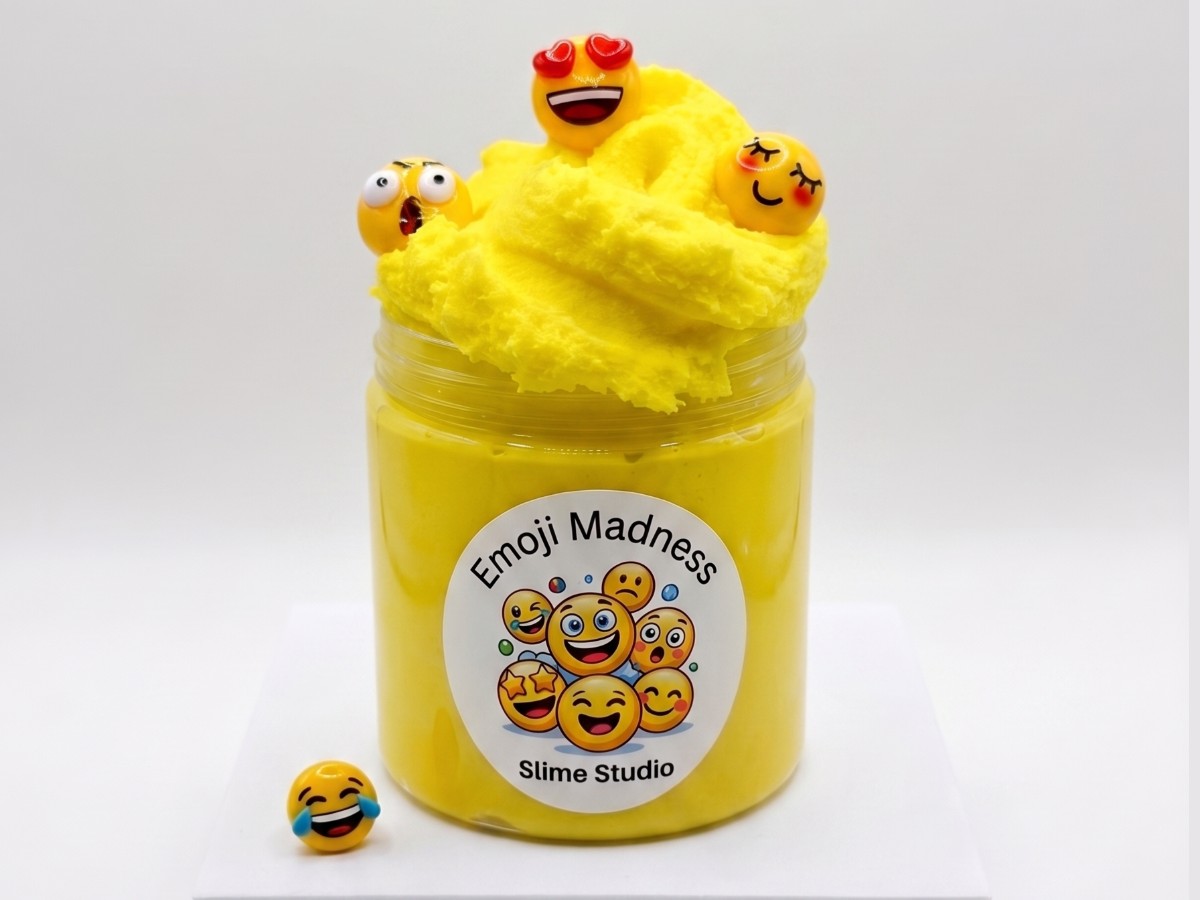
Our slimes are handmade to order in Hertfordshire. Most are butter slime, like Break the Bank (chocolate scented) and K-Pop O'Clock (bubblegum scented), and we also make a cloud slime, Emoji Madness. We sell them for ages 3 and over, with adult supervision for under-8s. Every order is usually dispatched within 1–2 working days (up to 5 at busy times), with free UK delivery on 5 or more slimes. Every slime also comes with a sticky fix pen, so please never use homemade activator, borax or contact lens solution on it.
Buy handmade slime in the UK →
FAQ
What is slime made of?
Most slime is PVA glue plus a boron-based activator such as borax, boric acid or a contact lens solution that contains them. Water, glycerin, soft clay, instant snow, colour, scent and charms are then added to change the texture and the look.
Is borax in slime safe?
Concentrated borax powder shouldn't be handled by children, and too much boron can be harmful. That's why toy slime has to stay under a boron limit of 300mg/kg, set in the toy safety standard EN 71-3. Adults should handle any activator, and it's worth buying slime from sellers with clear labelling.
Is PVA glue safe for making slime?
Children's craft or school PVA is the usual slime base. Check the label says it's intended for children's crafts, and avoid multi-purpose, industrial or solvent-based glues. Remember that glue is only one ingredient: the activator is the part that needs the most care.
What's the difference between butter slime and cloud slime?
Butter slime is usually a glue-based slime with soft clay mixed in, which makes it smooth, soft and spreadable. Cloud slime usually has instant snow mixed in, which makes it light, fluffy and drizzly.
Does "non-toxic" mean slime is safe to eat?
No. Slime isn't food, whatever the label says, and "non-toxic" on a glue bottle describes the glue, not the finished slime. If your child swallows slime and you're not sure whether it's harmful, call NHS 111. Call 999 or go to A&E if you think it may be harmful or they have severe difficulty breathing.

Written by Amber
Amber is the founder of Amber's Slime Studio. She has been making slime for years and still makes every batch by hand. She's passionate about creating high-quality slimes that bring joy and sensory satisfaction.
Learn more about Amber →