Sensory Play for Calm: A Parent's Guide to Using Slime for Big Feelings
Quick Answer
Sensory play for calm is simple parenting wisdom: busy hands often mean a calmer head. This practical guide covers building a calm-down corner, easy slime routines for after school, big feelings and quiet time, and the gentle rules that keep slime play soothing rather than chaotic.
Quick Answer: Sensory play for calm means offering a child a simple, hands-on activity — like squishing a soft butter slime — to help them settle after big feelings or busy days. It isn't therapy, just everyday parenting wisdom: busy hands often mean a calmer head. A mat, a timer and a few gentle rules keep it soothing rather than chaotic.
If home time in your house sometimes feels like the aftermath of a small storm, you're in good company. Sensory play for calm is one of the simplest tools in a parent's kit: a quiet, tactile activity that gives children somewhere to put all that leftover energy and emotion. Here at Amber's Slime Studio we make our slime by hand, and we hear the same thing from parents again and again — a few minutes of unhurried squishing can turn a wobbly afternoon around. This guide shares practical ways to use slime sensory play at home: no jargon, no miracle promises, just ideas that work in real family life.
Why Hands-On Play Helps Children Settle
Think about what you do when you're on a stressful phone call — fiddle with a pen, fold a receipt into tiny squares. Children are no different, only their feelings are bigger and their words are smaller.
Tactile play gives those feelings somewhere to go:
- It occupies the hands, which often quiets the rest of the body too
- It narrows focus to one simple, repeatable action — squash, stretch, fold, repeat
- It slows the pace. There's no score, no screen and no way to lose
- It's predictable. The slime feels the same every time, which many children find reassuring
We'll say this plainly, because it matters: slime is a toy, not a treatment. It doesn't fix anxiety or cure anything. But many families find it a genuinely soothing activity, in the same way a warm bath or a favourite story helps a child wind down.
Building a Calm-Down Corner (With Slime as One Tool)
A calm-down corner is simply a small, predictable spot where a child can go to regroup. It works best when it's set up before it's needed and never used as a punishment — it's a pit stop, not a naughty step.
You don't need much:
- A soft base — a beanbag, cushion or folded duvet
- Low stimulation — away from the telly, with softer light if possible
- A small basket of two or three calm things — a slime in its tub, a favourite book, a cuddly toy. Fewer choices means less overwhelm
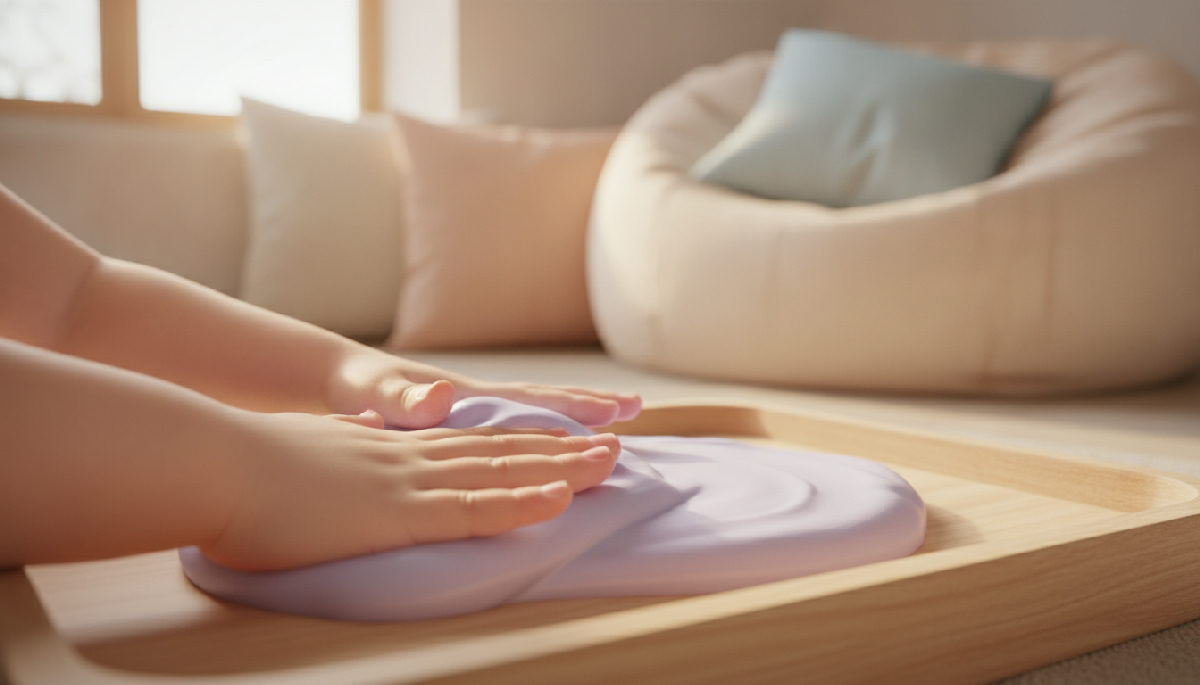
- A wipeable mat or tray for the slime, so nobody worries about the carpet
- A visual timer if your child responds well to knowing when things end
Amber's tip from our own kitchen table: keep the slime only in the calm corner rather than in general toy circulation. It stays special, it stays clean, and reaching for it becomes part of the settling routine itself.
Calming Sensory Activities for Kids: Three Simple Slime Routines
Routines beat rules for most children. Here are three we hear about most from our customers.
The after-school decompress
School days are loud, structured and sociable — a lot to hold in a small body. Before homework or questions about their day, try ten quiet minutes with a snack, a drink and a tub of slime at the table. Many parents find the stories come out on their own once hands are busy and nobody's making eye contact.
The big-feelings reset
When a meltdown is brewing (or has just blown through), talking often makes things worse before it makes them better. Once the loudest wave has passed, sitting alongside your child and squishing slime together — you take a piece too — offers connection without conversation. Keep it wordless until they start chatting first.
The quiet-time wind-down
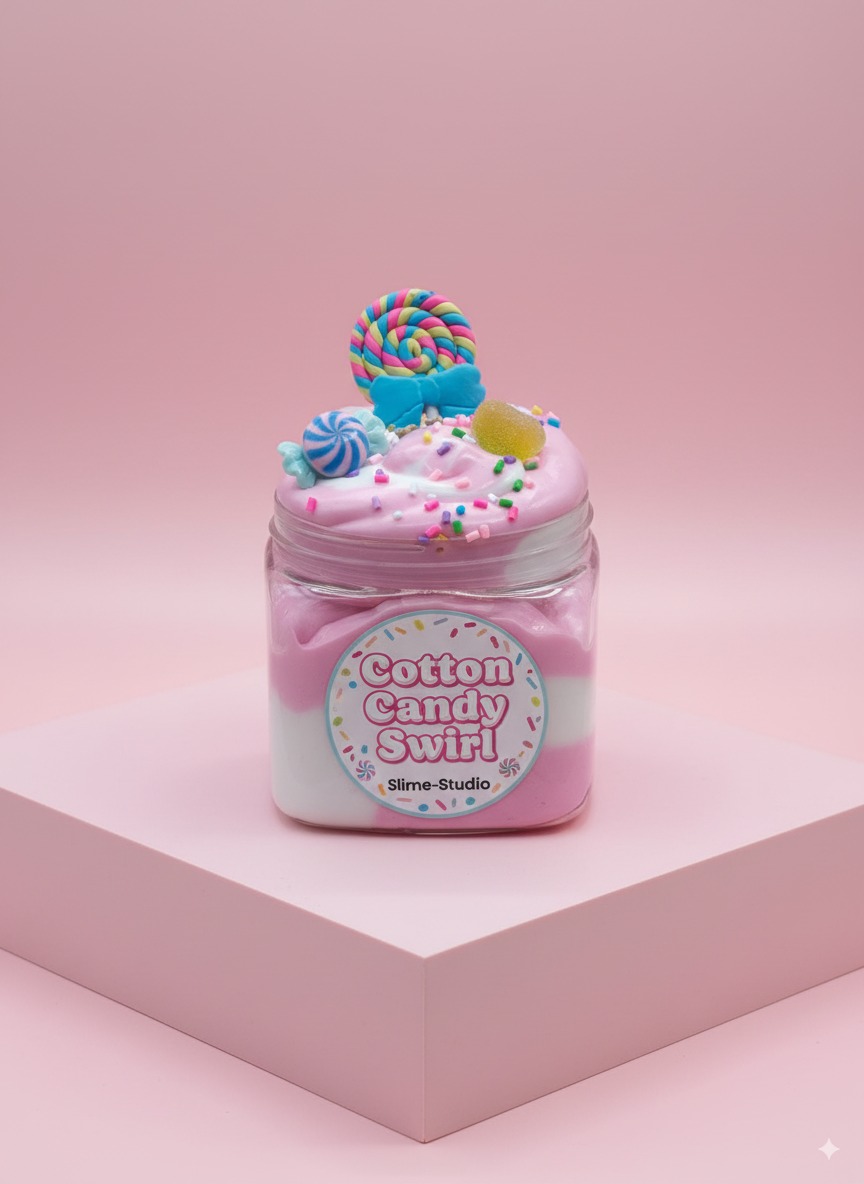
For children who've dropped their nap but still need a midday pause, or as part of a pre-bath evening routine, a timed slime session on a mat works well. Butter slime suits this beautifully because it's soft, holdable and doesn't drip — ours, like Cotton Candy Swirl with its pink-and-white swirls and candyfloss scent, is made to be smoothed and folded slowly rather than flung about.
Slime Rules That Keep It Calm, Not Chaotic
Slime play only stays calming if it doesn't end in a scrubbing-the-sofa argument. A few boundaries protect the peace:
- Slime lives on the mat or tray. Off the mat, back in the tub
- Hair up, sleeves up before the tub opens
- Hands washed before and after — before keeps the slime fresh for longer, after is just good habit
- Use a timer, agreed in advance, so ending isn't a battle
- One slime out at a time — mixing colours is a one-way trip
- An adult stays nearby. Our slimes are made from non-toxic ingredients and suit ages 3 and up, but young children should always be supervised
If you'd like the full lowdown on ingredients and safe play, our guide on whether slime is safe for kids covers it in detail.
Is Slime the Right Fit for Your Child?
Slime is brilliant for children who like squeezing, poking and kneading — the ones drawn to mud, dough and the interesting puddle. It suits moments when a child needs to slow down.
It's not the answer for every child or every moment:
- A child who needs to burn energy may do better with running, jumping or a dance about the kitchen first — slime can come afterwards
- Children who dislike sticky or unusual textures shouldn't be pushed. Try a smooth stone, playdough or water play instead
- Little ones who still mouth toys should wait — slime is for ages 3+ with supervision, no exceptions
A note for families with additional sensory needs
Some children with additional sensory needs really enjoy tactile play, and some don't — every child is different. We're a small toy shop, not sensory specialists, so if your child has SEND or particular sensory preferences, your child's own support team is the right place for tailored advice. We're simply here to make lovely slime if it turns out to be their thing.
Choosing a Calming Slime
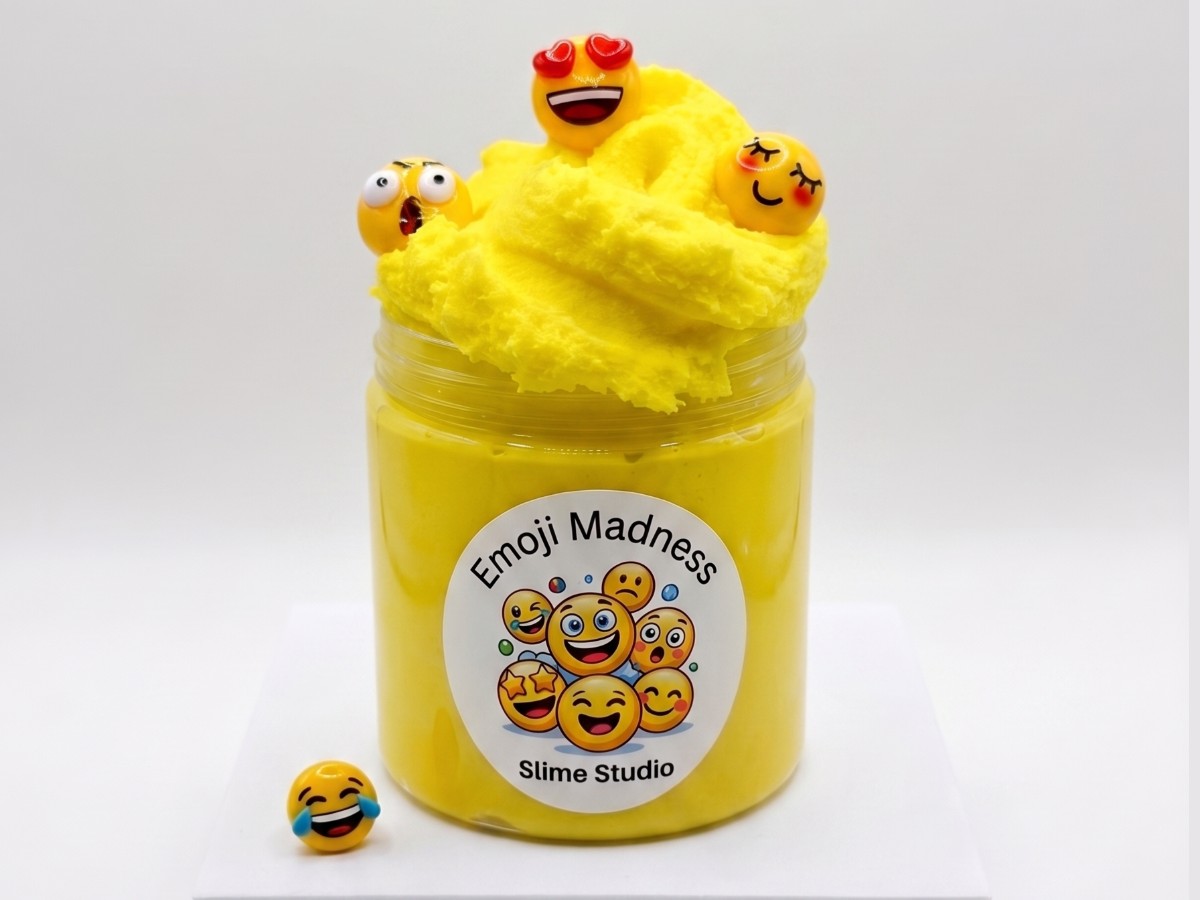
Most of what we make is butter slime — soft, spreadable and satisfyingly holdable, which is exactly the texture most parents want for calm play — at £8.99 each. If your child prefers something lighter to watch than to squeeze, our cloud slime Emoji Madness drizzles rather than holds. Everything is handmade fresh to order and dispatched within 5 working days, with free UK delivery when you order five or more.
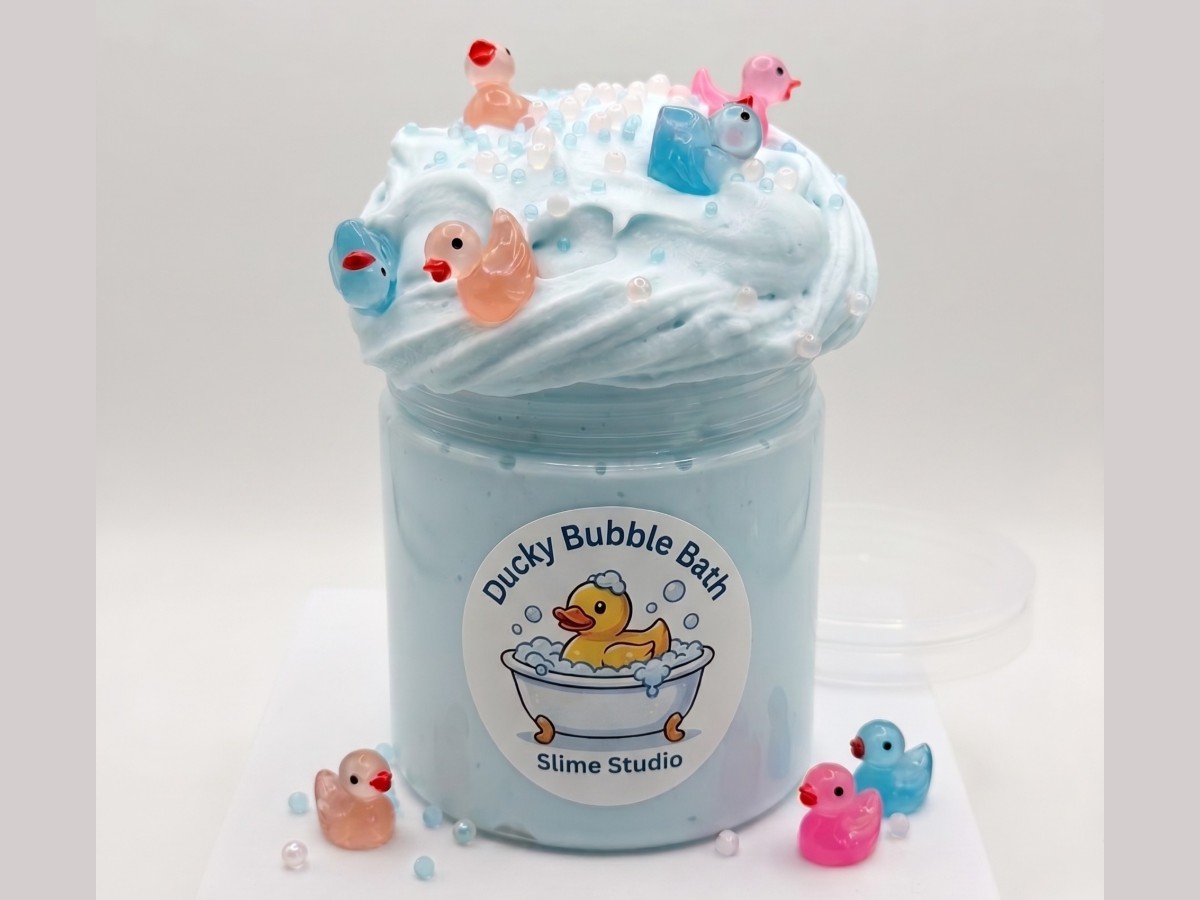
For wind-down time we'd point you to gentle scents: Cotton Candy Swirl (candyfloss), Ducky Bubble Bath (passion fruit, with little duck charms) or Break the Bank (chocolate and caramel). Livelier characters like K-Pop O'Clock and Sports Launch are just as soothing in the hands — browse the whole line-up in our shop, and see them in action on Instagram at @ambersslimestudio.
New to slime care? Our step-by-step slime instructions will keep every tub in top condition.
FAQ
What age can children start calm slime play?
Our slimes suit ages 3 and up, always with adult supervision. Younger children who still put things in their mouths should stick to other sensory play for now.
Does slime help with anxiety or ADHD?
We're a toy shop, not health professionals, so we won't claim that. What we can say honestly is that many families find slime a soothing, absorbing activity. If you have concerns about your child's wellbeing, please speak to your GP or your child's support team.
How long should a calm-down slime session last?
Ten to fifteen minutes is plenty for most children. Using a timer agreed in advance keeps the ending calm too.
How do I stop slime play turning messy?
A wipeable mat, sleeves up, one slime out at a time and "off the mat means back in the tub". Butter slime helps here — it holds together rather than dripping.
Which slime is best for a calm-down corner?
Any of our butter slimes, at £8.99 — they're soft, holdable and don't drip. For our thoughts on the most soothing picks, see our guide to the best slime for stress relief.
Written by Amber
Amber is the founder of Amber's Slime Studio with 3+ years of experience crafting premium handmade slimes. She's passionate about creating safe, high-quality slimes that bring joy and sensory satisfaction.
Learn more about Amber →